
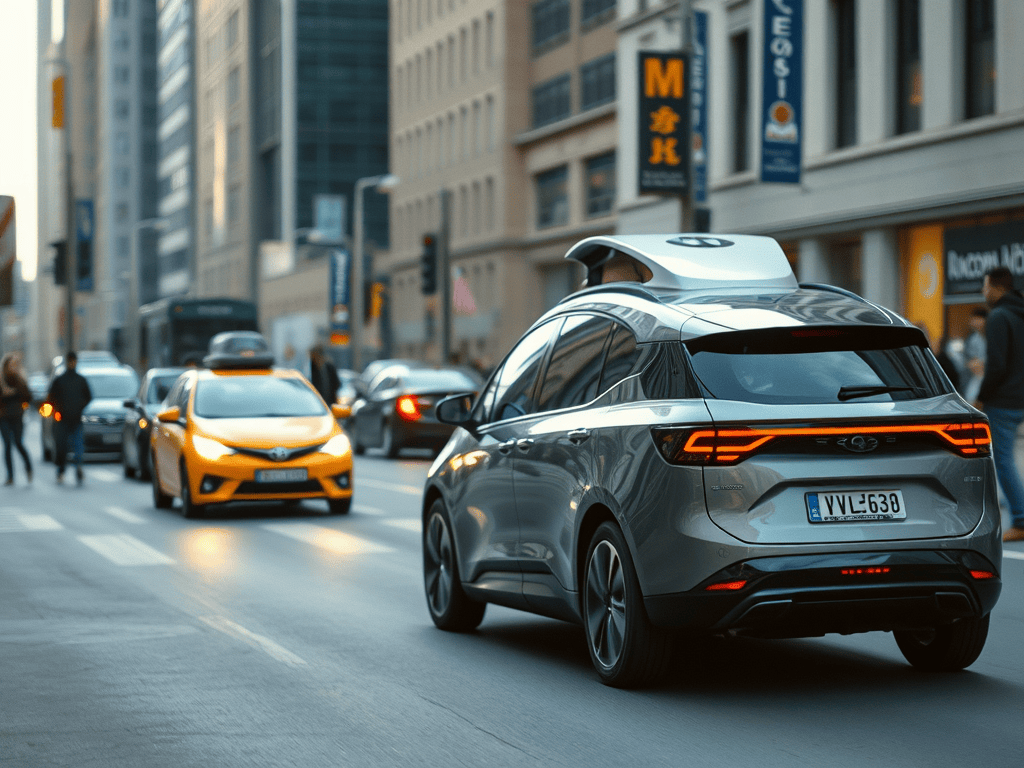
Autonomous vehicles (AVs) are transforming the transportation industry with promises of safer roads, reduced traffic congestion, and optimized fuel consumption. At the heart of these innovations lies Artificial Intelligence (AI), which enables vehicles to “think,” “sense,” and “act” autonomously. As AI continues to evolve, businesses involved in the autonomous vehicle space must stay ahead of technological trends to position themselves strategically for future opportunities.
Current Progress of AI in Autonomous Vehicles
- Perception Systems: Making Sense of the Environment
AI-driven perception systems form the backbone of autonomous vehicles. These systems use a variety of sensors—such as LIDAR, radar, cameras, and ultrasonic sensors—to gather data about the vehicle’s surroundings. Through AI, this raw sensor data is transformed into actionable insights. For example, computer vision models identify pedestrians, other vehicles, traffic signals, and obstacles on the road. Machine learning (ML) algorithms analyze this data in real-time, enabling vehicles to make safe decisions on lane changes, speed control, and braking. Technical Advancements: Recent breakthroughs in deep learning are making perception systems more accurate. In 2023, NVIDIA’s DRIVE AGX Pegasus platform introduced new deep neural networks (DNNs) that significantly improve vehicle perception, making it possible for AVs to operate reliably even in complex urban environments with dense traffic. - Decision-Making and Control: How AI Handles Navigation
Autonomous vehicles rely heavily on AI for decision-making. The ability to navigate in real-time, adapt to road conditions, and follow traffic rules depends on advanced algorithms. Reinforcement learning (RL) plays a critical role here, where AI systems learn optimal driving behaviors through trial and error. Technical Insight: A growing trend is the use of “simulation environments” for training AVs. These environments allow AVs to practice navigating challenging scenarios (e.g., complex intersections, roadblocks) before they face them in the real world. Companies like Waymo and Tesla utilize these simulation environments to significantly accelerate the training process, improving their vehicles’ decision-making capabilities in less time. - AI and Safety: Enhancing Risk Management
One of the critical challenges in deploying AVs is ensuring safety. AI systems are equipped with predictive modeling capabilities that assess the likelihood of accidents and act preemptively. These models leverage vast datasets from millions of miles of driving to learn how to anticipate potentially dangerous situations, such as detecting sudden stops by other vehicles or identifying risky pedestrian behavior. Regulatory Considerations: With safety as a top concern, regulators worldwide are tightening standards for AV development. In 2024, new safety benchmarks have been introduced in the U.S. and Europe that require AV developers to submit data demonstrating the safety of AI decision-making systems before obtaining operational licenses.
Challenges Facing AI in Autonomous Vehicles
- Data Complexity and Processing: The sheer volume of data an autonomous vehicle processes in real-time is staggering. Every second, AVs collect terabytes of data from various sensors. While this data is essential for navigation, it also presents a computational challenge. High-performance AI systems are required to process this data instantly, balancing safety, efficiency, and comfort. In response to this, the development of specialized hardware like AI accelerators is on the rise.
- Edge AI and Latency Reduction: Autonomous vehicles must make decisions in milliseconds. The need for fast processing has led to the implementation of Edge AI, where AI computation is moved closer to the data source (i.e., within the vehicle itself) to minimize latency. As a result, vehicle manufacturers are increasingly adopting custom AI chips, such as Tesla’s Full Self-Driving (FSD) computer and Qualcomm’s Snapdragon Ride platform, which process data at the edge to improve decision-making speed.
- Interoperability and Scalability: While AI in autonomous systems is progressing, scalability remains an issue. Ensuring that these systems function across different geographies, weather conditions, and traffic environments requires extensive testing and the development of standardized communication protocols between AVs and infrastructure (e.g., smart traffic lights). Companies such as Intel and Mobileye are working on “Vehicle-to-Everything” (V2X) technology that allows vehicles to communicate with surrounding infrastructure for better road coordination.
Future Trends: Preparing for the Autonomous Future
- Autonomous Freight and Public Transportation
The AV market is not just limited to personal vehicles. Autonomous freight and public transportation are emerging as key areas of focus for 2024 and beyond. The trucking industry, in particular, is poised for transformation as companies like Aurora and TuSimple develop autonomous long-haul solutions. This shift will alleviate driver shortages and improve supply chain efficiency. Business Insight: For businesses dealing in autonomous vehicles, this trend opens new revenue streams. Developing AI systems that can optimize long-distance travel, manage fleet operations, and ensure safety on highways will be essential to success in this domain. - Collaboration Between AI and Human Drivers (Level 3 Autonomy)
While fully autonomous vehicles (Level 5) are still several years away, AI will play a growing role in semi-autonomous systems (Level 3). In these systems, AI will assist human drivers by taking over critical tasks, such as highway driving, but human intervention will still be required for complex situations. This human-AI collaboration will be a critical phase in the broader adoption of AVs. Technical Roadmap: As businesses plan their strategies, they must recognize that developing smooth human-machine interfaces (HMI) and ensuring a seamless handoff between AI and human control will be key to winning over skeptical consumers and regulators. - AI and Regulation: The Path Forward
Governments are ramping up efforts to regulate the AV industry, particularly in terms of AI safety and ethics. The recent European Union AI Act is a significant step toward formalizing these regulations, requiring strict compliance from AV developers in terms of data handling, bias elimination, and transparency. Companies that proactively align with these regulations will gain a competitive edge in global markets.
Strategic Recommendations for Business and Solution Architects
- Invest in AI-Driven Infrastructure: To support the next wave of autonomous vehicles, investing in smart infrastructure—such as V2X systems, 5G connectivity, and cloud-based AI systems—will be critical for businesses. These investments can help unlock new levels of efficiency and safety in AV deployment.
- Prioritize AI Talent and Innovation: Staying competitive in this fast-evolving field will require a focus on talent acquisition and research. Encouraging partnerships with AI startups, academic institutions, and R&D teams can accelerate innovation in perception systems, decision-making algorithms, and simulation environments.
- Focus on Ethical AI Deployment: Ethical considerations, such as data privacy, transparency, and bias reduction, must be integrated into AI strategies. Businesses should establish clear governance structures to ensure compliance with emerging AI regulations while building trust with consumers and regulators alike.
Conclusion
AI in autonomous vehicles is progressing rapidly, offering both opportunities and challenges. For businesses involved in this space, staying ahead of the curve by investing in AI-driven innovation, infrastructure, and ethical AI deployment will be crucial. As the market matures, collaboration between AI and human-driven systems will become an important transitional phase, and businesses that navigate these challenges with foresight will emerge as industry leaders.







 Digi Wired
Leave a comment